
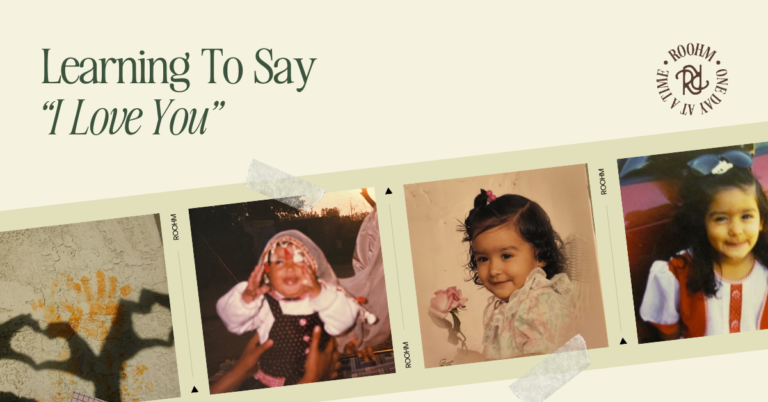
Feel Like Listening Instead?
Something to listen to while you make tea, fold laundry, or pause for a moment.
“I love you” is used in so many contexts. From the casual “love you, bye” while hanging up the phone, to the serious “I love you” during a life-or-death situation, and then everything in between.
Over the years, I’ve had an interesting relationship with the word love, and it’s something I find myself revisiting as I think about one day having a family of our own. February seems like as good a time as any to take that stroll down memory lane. Let’s get into it.
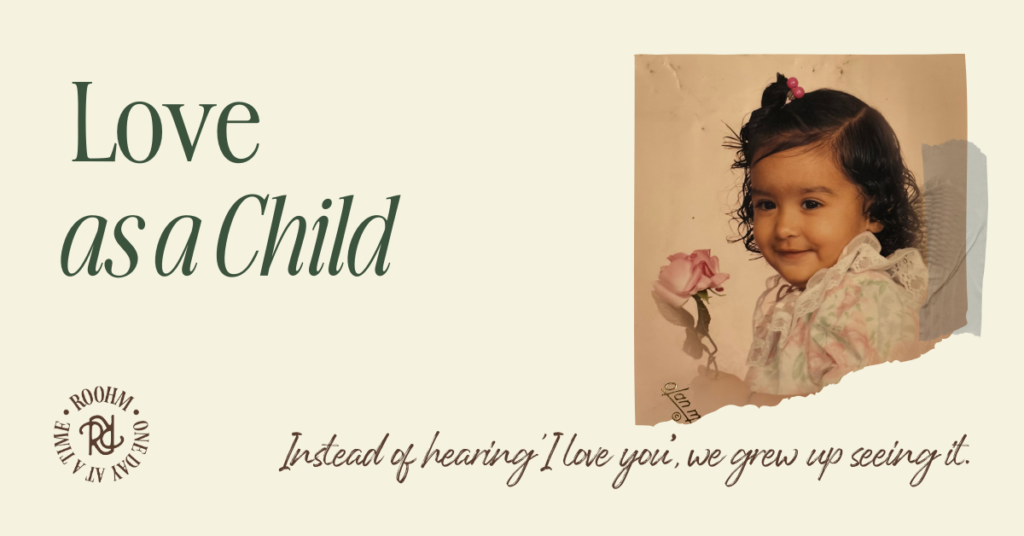
Love as a Child
Instead of hearing ‘I love you’, we grew up seeing it.
Growing up in a Punjabi household, the word love didn’t exist.
Instead of hearing it, we grew up seeing it—but when I was a kid, I didn’t really register that. We were told, “sher ban,” which literally translates to “be a lion,” aka push down all those feelings you’re feeling and “be strong.”
If you’re not familiar with South Asian culture, you might be going, that’s wild…but this is also how our parents grew up. Add the layer of them immigrating to the U.S. and figuring out how to live in a brand-new country without any support, learning a new language, and raising kids for the first time—processing their feelings wasn’t at the top of their priority list. They were in survival mode.
Our parents’ goal was to make sure we had everything we needed to be successful, and in their eyes that meant getting a good job and getting married. That’s how they showed us love. They left behind their lives to give us the opportunity for something better.
All of our family who immigrated from India stayed at our house until they found their own homes, so there were always at least ten people around. I had a blast and was always entertained, so I wasn’t really sitting around thinking about how our parents didn’t say “I love you” to us.
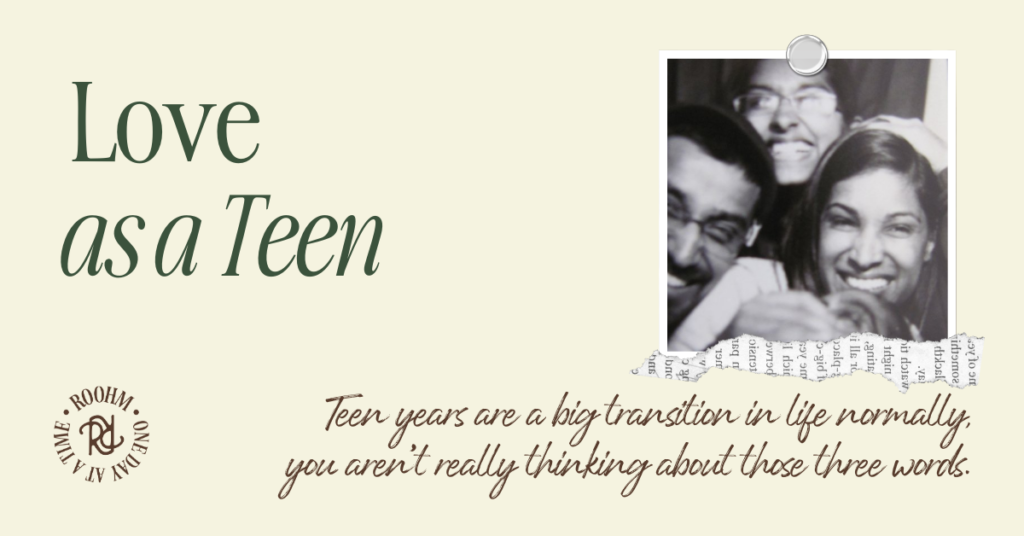
Love as a Teen
Teen years are a big transition in life normally […], you aren’t really thinking about those three words.
We moved to the Midwest when I was in sixth grade, right on the cusp of my teen years. At this time, it was my mom, dad, my little sister, and me. My older brother was there for two years to help our dad get his gas station up and running, and my two older sisters stayed in California to go to college. My dadi, my dad’s mom, also stayed with us for a while.
My dad was rarely home because he was working, and my mom also worked, so going from a house that was always full to a mostly empty one felt odd. I ended up learning how to cook and clean because my dadi couldn’t really do much.
Teen years are a big transition in life normally. Add a move across the country to that, and you aren’t really thinking about those three words still. I was trying to figure out how to make friends, what my identity was, and why girls had to suffer through a period each month. This was also the time “crushes” started developing…what a confusing time—especially as a brown girl, where even thinking about boys was basically considered a sin.
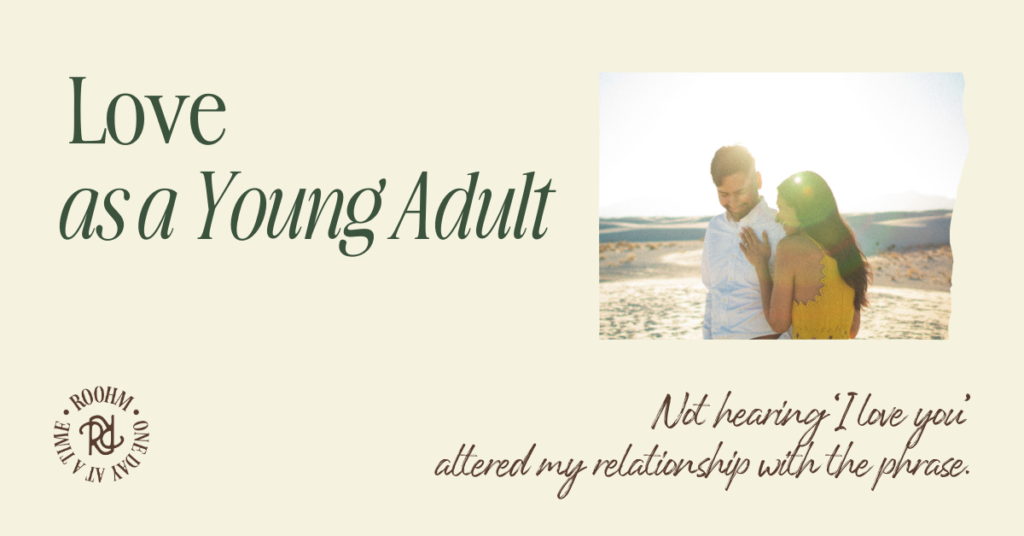
Love as a Young Adult
Not hearing ‘I love you’ altered my relationship with the phrase.
I didn’t start hearing “I love you” until I was in college, and at that time it felt weird to hear those words from my mom. It felt fake and unnatural…almost like a joke.
I’ve always been a highly sensitive person—meaning I have a gift (or curse, I haven’t decided yet) of feeling emotions pretty intensely as they happen in real time. I’ve also been empathetic and socially aware from a young age. So, I always knew my mom loved me and my siblings loved me, even though we never said it out loud.
It was when I met Navraj, my husband now, that I learned the art of communication and how important words can be. How not hearing “I love you” altered my association with the phrase—and how I’ve been learning to rewire my brain to accept it.
When I first said “I love you” to Nav, it felt like an out-of-body experience. It was a different kind of love than what I had with my family or friends.
With family, you have this feeling of they’re always going to be there in the back of your head, so it’s something that naturally comes with the territory (as someone who has experienced loss and divorce in our family, I know it’s not always that simple—but stick with me here).
With close friends, it’s a similar feeling. You’ve accepted these people as an extension of your family.
But with a partner, you are trusting this person with all of you—your feelings, your mental and physical state, your future. As a young adult, I started my journey of exploring what love means to me.
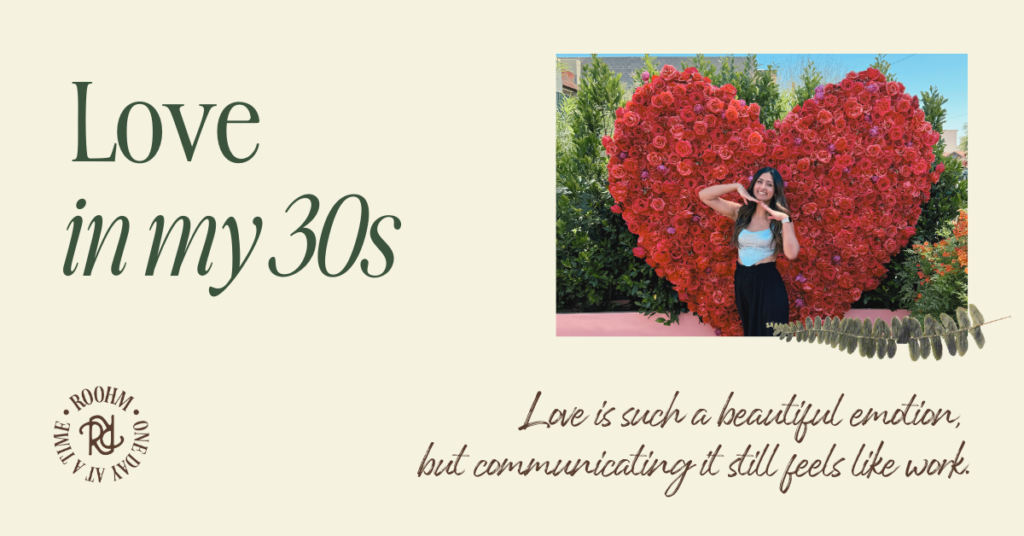
Love in My 30s
Love is such a beautiful emotion, but communicating it still feels like work.
Today, the journey continues. Navraj is still the only person that saying “I love you” to feels natural for.
My little sister and I talk about this a lot—she can say “I love you” to her roommate or her friends, but she never says it to me, and I don’t say it to her, even though we are closest to each other in our family.
I’ve started saying it to my mom and my in-laws, but sometimes I find myself saying it for them versus me actually wanting to say it. I don’t think it’s because there’s a lack of love—it just still feels unnatural because we didn’t grow up saying it. That’s a mental block I’m working through.
I don’t really say it to my friends unless they say it to me. I just started saying it to one of my oldest friends of 10+ years. Baby steps.
It’s something I’m working on understanding, because love is such a beautiful emotion, and being able to communicate it with someone is a special act. That’s where I get stuck—the communication portion. Even with myself, the self-love conversation could be a whole different post.
How about you? What does love mean to you in your current season of life?
2 Responses
2 Responses
I feel this so much, super encouraging to see it framed as something we can grow into.
That’s one of the beauties of life! Happy to hear it resonated (: